Showing posts with label Trekking in Nepal. Show all posts

Sunday, August 2, 2015

Churen Himal Trekking

Churen Himal

Churen Himal is among the seventh series mountain lying in the Dhaulagiri range. It has three peaks, which are Churen West (7,371m), Churen East (7,371m) and Churen Main (7,385m). The Churen Himal trek is a completely isolated trekking destination and is an off-the beaten path abundant with beautiful nature, on the north of Dhorpatan Hunting reserve offering spectacular views of Dhaulagiri, Annapurna, Gurja Himal and Churen Himal.

The trekking to base camp begins from Beni from where you’ll trek up to Babichaur. From there, our route crosses unique Magar villages, especially ‘Gurja gaon’ with a majority of Magar inhabitants. This area is full of clear rivers, fast glacial streams, dense luscious forests and animals. From Gurjagaon you have to trek to Darsinge Kharka which is an isolated destination. From Darsinge Kharka, we trek towards Bundzunge Kharka. This is the penultimate destination and from this destination we shall finally reach Churen Himal Base Camp.

If you are interested in this trek, please feel free to contact us.

Day to day itinerary:
Day 01: Arrival in Kathmandu. Transfer to hotel.
Day 02: Kathmandu valley sightseeing.
Day 03: Drive to Pokhara then to Beni.
Day 04: Trek to Babichor.
Day 05: Trek to Dharapani.
Day 06: Trek to Lumsang.
Day 07: Trek to Gurjaghat.
Day 08: Trek to Rupachaur Kharka.
Day 09: Trek to Gurjagaon.
Day 10: Trek to Darsinge Kharka.
Day 11: Trek to Bundzunge Kharka.
Day 12: Trek to Churen Himal BC and back to Bundzunge Kharka.
Day 13: Trek to Gurjagaon.
Day 14: Trek to Lumsang.
Day 15: Trek to Khibang.
Day 16: Trek to Malkwang.
Day 17: Trek to Pakhapani.
Day 18: Trek to Jhi. Drive to Beni.
Day 19: Drive to Pokhara.
Day 20: Drive to Kathmandu.

Day 21: Final departure. Transfer to the airport.

Wednesday, July 29, 2015

Lower Mustang Trek

Kagbeni

Mustang is a remote, semi-independent Tibetan kingdom opened to the outside world for trekking in the year 1992 lies just to the north of the Annapurna Region on the Tibetan border. Lower Mustang Trek is the classic tea-house trek in Nepal where you can explore and observe the lifestyle and traditions of Gurung, Magar and Thakali ethnic communities of Nepal. The trek follows the ancient trading route to Tibet in the Kali Gandaki valley.

Chorten along the way

This Lower Mustang Trek is a part of Annapurna trek that takes us first to Poon Hill for breathtaking views of the Dhaulagiri and Annapurnas and then to the southern border of the kingdom of Mustang. Ghorepani Poon Hill trek takes you to the west of Pokhara giving superb Himalayan scenery of the whole Annapurna region, crossing beautiful Gurung villages and rhododendron forests. 

Muktinath Temple

From Poon hill, we trek to Tatopani where you can soak your tired body in the hot springs for some relaxation. From there, the route goes to Muktinath; a sacred temple for both Buddhist and Hindu followers via Kagbeni which is the door to the Kingdom of Mustang. After visiting the temple, we trek to Jomsom: the headquarter of Mustang and fly back to Pokhara.

If you have any queries regarding the trek, please feel fee to contact us.

Day to day itinerary:
Day 01: Arrive in Kathmandu and transfer to hotel.
Day 02: Kathmandu valley sightseeing.
Day 03: Drive from Kathmandu to Pokhara.
Day 04: Drive from Pokhara to Nayaypul and trek to Tikhedunga.
Day 05: Trek to Ghorepani.
Day 06: Early morning hike to Poon Hill and trek towards Tatopani.
Day 07: Trek to Ghasa.
Day 08: Trek to Tukche.
Day 09: Trek to Kagbeni.
Day 10: Trek to Muktinath.
Day 11: Trek to Jomsom.
Day 12: Fly from Jomsom to Pokhara.
Day 13: Drive from Pokhara to Kathmandu.
Day 14: Rest day at Kathmandu.

Day 15: Final departure, Transfer to the airport.

Monday, July 27, 2015

Ama Dablam Expedition

The iconic Ama Dablam

Dominating the sky above the trekker's trail to the Everest Base Camp, Ama Dablam is the third most popular Himalayan peak for permitted expeditions. At a height of 6,856m, Ama Dablam is one of the most iconic mountains in Nepal as it towers over Tengboche monastery and the Sherpa village of Pangboche. It is also one of the best view points in the Himalayas with superb panoramic views of Everest, Lhotse, Nuptse, Cho Oyu, Makalu and many more peaks. The mountain derives its name from the glacier lying on the neck of the mountain. The hanging glacier looks like a traditional pendant worn by the Sherpa women, hence the name Ama Dablam, literally meaning 'The Mother's necklace'.

The expedition to the summit of Ama Dablam is technically demanding comprising of steep ice and rock with exposed ridges and presents supreme challenge. This month-long expedition is suited to strong rock climbers and technically-orientated mountaineers. You will need a high level of competence ascending and descending fixed ropes and passing anchors. Southwest Ridge is the most popular route to ascend Ama Dablam where three high camps above base camp are set up along the ridge at strategic points. The route offers varied and sustained climb with reasonable level of difficulty.


Our trek begins by taking an exciting flight to Lukla. We acclimatize at Namche Bazaar – Gateway to the Himalaya. We trek through numerous Sherpa villages before arriving in the grassy surrounds of Ama Dablam Base Camp, which is undoubtedly one of the more scenic base camps in the Himalayas. Crossing through severe and deep crevasses and rocks and a final steep climb on snow and ice on the right of the hanging glacier, we reach the summit of Ama Dablam, where you will be rewarded with breathtaking panoramic mountain views that you will treasure all your life. 

Join us in this spectacular journey to Ama Dablam.

Day to day itinerary: 

Day 1: Arrival day in Kathmandu.
Day 2: Preparation day in Kathmandu.
Day 3: Fly to Lukla.
Day 4: Trek to Namche Bazaar.
Day 5: Rest & Acclimatization at Namche Bazaar.
Day 6: Trek to Deboche.
Day 7: Trek to Pheriche (4,300m).
Day 8: Acclimatization above Pheriche.
Day 9: Trek to the Amadablam Base Camp.
Day 10-25: Ascent of Ama Dablam.
Day 26-27: Trek back to Lukla.
Day 28: Fly from Lukla to Kathmandu.
Day 29: Rest day at Kathmandu.
Day 30: Depart Kathmandu.

Thursday, July 23, 2015

Everest Base Camp Trek

Everest Base Camp

Trekking to Everest Base Camp is a once in a lifetime opportunity to embark on an epic journey that Sir Edmund Hillary and Tenzing Norgay set off on in 1953. Everest Base Camp trek is the grandest walk in the land of Himalayas to the foot of the highest mountain in the world-Mt Everest. Trekking to the camp offers astounding mountain views and a glimpse in to the life of the world’s famous climbers-the Sherpas.

The mighty Everest

Four of the world's six tallest peaks: Mt. Everest, Mt. Lhotse, Mt. Makalu, and Mt. Cho Oyu rises above everything else, crowning the towering ridges that straddle the forbidding Himalayas. It is without a doubt one of the most renowned trekking route in the World. Nowhere in the world is trekking more spectacular than in the Everest region.

Everest, Nuptse and Lhotse 

Starting with an exciting mountain flight from Kathmandu to Lukla, we trek to the bustling Namche Bazaar which is the gateway to the Everest region, via the Dudh Kosi River and after a night at Phakding. Moving ahead through the homelands of the Sherpa people with Mt Ama Dablam towering, the trek further offers the opportunities to walk through the Sagarmatha National Park (a World Heritage Site), visit to the highest monastery-Tengboche monastery, splendid panoramic views of the Everest, Nuptse, Lhotse, Pumori and several others from the highest viewpoint-Kala Patthar and finally the ultimate destination to the base camp of the mighty Everest.

Join us in this spectacular journey to the Everest Base Camp.

Day to Day Itinerary:
Day 01: Arrive in Kathmandu. Transfer to hotel.
Day 02: Kathmandu valley sightseeing and trek preparation.  
Day 03: Fly From Kathmandu to Lukla. Trek to Phakding. 
Day 04: Trek to Namche Bazaar.
Day 05:  Acclimatization day at Namche Bazaar.
Day 06: Trek to Tengboche.
Day 07: Trek to Dingboche.
Day 08: Acclimatization day at Dingboche.
Day 09: Trek to Lobuche.
Day 10: Trek to Gorakshep. Hike to Everest Base Camp and back.
Day 11: Hike to Kala Patthar and trek to Pheriche.
Day 12: Trek to Namche.
Day 13: Trek to Lukla.
Day 14: Fly from Lukla to Kathmandu.
Day 15: Free day in Kathmandu.

Day 16: Final departure.

Tuesday, July 21, 2015

Makalu Base Camp Trek

Makalu base camp

Mt. Makalu (8,463m) is the fifth tallest mountain of the world. A close neighbor to Mount Everest and Kanchenjunga, it lies in the northeast region of Nepal in the Makalu-Barun National Park bordering Tibet. Makalu means the Great Black One, so called due to its dark brooding appearance. Established in 1992, Makalu-Barun National Park is the only National Park that expands from tropical forest to world’s highest alpine zone above 8000 meters from sea level. Having a wide range of attitudinal and climatic variations, the Makalu-Barun area offers a remarkable and diverse habitat for a rich variety of flora and fauna.


Mt Makalu

The route begins with a flight into Tumlingtar, a town at the base of the hills that climb into Makalu-Barun National park. Nestled in the lower reaches of the valley are communities of Rai, Sherpa, and Shingsawa (Bhotia) farmers. Though economically poor and isolated, they retain a rich cultural heritage. They hold the key to the preservation of the unique biological and cultural treasures of the Makalu Barun area. We will then drive to our trailhead in Chichira. Through villages and subtropical forests, descents ascents of the Arun River valley, and hikes over a series of passes including Shipton La pass (4200m) into the upper Barun valley, we finally reach Makalu Base Camp. From a view point above Makalu Base Camp there are stunning views of the world's highest mountains, including Everest (8,845m), Lhotse (8,516m), Makalu (8,463m), Chamlang (7,319m) and Baruntse (7,220m).

Most of the trekkers and mountaineers visit the Makalu-Barun area during October-November and March-April when high passes are less likely to be snowed over. Lower elevations are temperate throughout winter, and hot during April and May. Heavy monsoon rains occur throughout the region from June through September, with occasional showers during April-May. Makalu base camp trekking is one of the most remote and unfrequented trekking areas of Nepal where tourist are visited for unforgettable life experience.

If you are interested, feel free to contact us.

Day to day itinerary:
Day 01: Arrive in Kathmandu. Transfer to hotel.
Day 02: Kathmandu valley sightseeing and trek preparation.
Day 03: Fly from Kathmandu to Tumlingtar and drive to Chichira.
Day 04: Trek to Num.
Day 05: Trek to Seduwa.
Day 06: Trek to Tashigaon.
Day 07: Trek to Khongma Danda.
Day 08: Acclimatization at Khongma Danda.
Day 09: Trek to Dobate.
Day 10: Trek to Yangri Kharka.
Day 11: Trek to Langmale Kharka.
Day 12: Trek to Makalu Base Camp.
Day 13: Explore Makalu Base Camp.
Day 14: Trek to Yangri Kharka.
Day 15: Trek to Dobate.
Day 16: Trek to Khongma Danda.
Day 17: Trek to Tashigaon.
Day 18: Trek to Seduwa.
Day 19: Trek to Num.
Day 20: Trek to Tumlingtar
Day 21: Fly from Tumlingtar to Kathmandu.
Day 22: Free day at Kathmandu.
Day 23: Final departure. Transfer to the airport.

Sunday, July 19, 2015

Upper Mustang Trek

Mustang

Once an independent kingdom, the kingdom of Mustang was annexed by Nepal after Nepal was declared a republic in 2007. The Mustangis or the people of Mustang call themselves Lobas, and they have their own King or Tribe-leader, Jigme Palbar Bista. The Nepal Government took back the official recognition of Bista as the Mustangi King but however, the people there still respect him as their King. Bista also grants audience to the visitors upon request. 

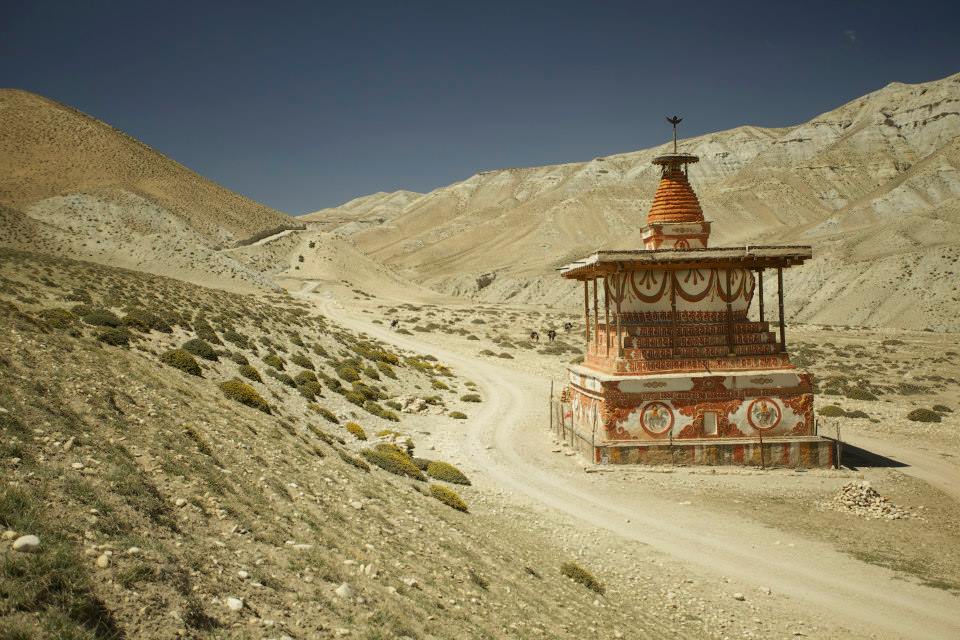
Chorten along the way

Mustang is rich in Buddhist culture, similar to the area of the Tibet Autonomous Region of the People's Republic of China. Thus, it is an alternate way to experience the Tibetan culture and landscape.

Kagbeni along the Kali Gandai river

Upper Mustang trek starts after a scenic flight to Jomsom: the district headquarter of Mustang. Walking along the Kali Gandaki River, we trek to Kagbeni from where a special Mustang permit is required to pass beyond the point. Crossing mountain passes, fields of Barley and several ancient villages, we reach Lo-Manthang. The white washed walls at the city enclose around 150 homes, Gompas and a palace. At Lo-Manthang, we explore the town and observe a vibrant Tibetan culture.

If you are interested in this frre, feel free to contact us. 


Day to day itinerary:

Day 01:  Arrive in Kathmandu. Transfer to hotel.
Day 02:  Kathmandu valley sightseeing.
Day 03:  Drive from Kathmandu to Pokhara.
Day 04:  Fly from Pokhara to Jomsom. Trek to Kagbeni
Day 05:  Trek to Chele.
Day 06:  Trek to Geling.
Day 07:  Trek to Tsarang.
Day 08:  Trek to Lo-Manthang.
Day 09:  Explore Lo-Manthang.
Day 10:  Trek to Ghami.
Day 11:  Trek to Samar.
Day 12:  Trek to Kagbeni.
Day 13:  Trek to Jomsom.
Day 14:  Fly to Pokhara.
Day 15:  Drive to Kathmandu.
Day 16:  Free day at Kathmandu.
Day 17:  Final Departure. Transfer to the airport.

Wednesday, July 15, 2015

Across the Kali Gandaki


One of the most popular trek in Nepal, also referred to as Apple Pie trek cos of the culinary skills of the legendary Thakali inn-keepers who run some of the most pleasant mountain lodges and a reminder of the apple orchards near the quaint and charming settlement of Marpha, is the gateway to Nepal’s hidden treasure “Mustang”. Because of the varied topography and places of interests, this trek is famously known with trekkers where you explore the arid dry landscape of Mustang resembling the Tibetan Plateau and visit the renowned Hindu and Buddhist’s sacred pilgrimage site of Muktinath passing through the highest pass in the world – Thorong La Pass.  This trek also takes you through the Kali Gandaki gorge – the deepest gorge in the world – where the powerful Kali Gandaki River cut deep through the Himalaya between the massive peaks of Annapurna and Dhaulagiri. The Kali Gandaki gorge has been used as a trade route between India and Tibet for centuries. Today, it is part of a popular trekking route from Pokhara to Muktinath, part of the Annapurna Circuit. The gorge is within the Annapurna Conservation Area.


The cultural diversity is another amazing thing in this trekking trip. At the start of the trek, you pass first through Brahmin and Chhetri villages, then Gurung and Magar villages of Ghorepani, and finally, along the Kali Gandaki – Thakali villages. This “Across the Kali Gandaki” trekking offers you the experience of a lifetime.

If you are interested, feel free to contact us.

Itinerary:

Day 01: Arrival day in Kathmandu (1,300m/4,264 ft)
Day 02: Kathmandu valley sightseeing and Trek preparation.
Day 03: Drive from Kathmandu to Pokhara (820m)- 6 to 7 hrs
Day 04: Drive to Nayapul & trek to Tikhedhunga- (1,577m)- 3 to 4 hrs
Day 05: Tikhedhunga to Ghorepani (2,850m) - 5-6 hrs
Day 06: Early hike to Poon Hill and trek down to Tatopani (1,190m),- 5 to 7 hrs
Day 07: Tatopani to Kalopani (2,560m),-6 to 7 hrs
Day 08: Kalopani to Marpha (2,665m), -5 to 6 hrs
Day 09: Marpha to Kagbeni (2,810m), -4 to 5 hrs
Day 10: Kagbeni to Muktinath (3,800m), -3 to 4 hrs
Day 11: Early morning climb to Thorung-La Pass (5,416m) back to Muktinath (3,800m)
Day 12: Muktinath to Jomsom (2,713m), - 5 to 6 hrs
Day 13: In the morning fly to Pokhara (850m), flight about 25 minutes.
Day 14: At noon flight to Kathmandu from Pokhara.

Day 15: Final Departure. Transfer to the airport.

Tuesday, July 7, 2015

Sirubari village trek


SIRUBARI is a famous name for village tourism. The village is a totally unspoiled Gurung settlement set in the hills at 1700 metres above sea level. Sirubari Village Tour takes you to the rural village called Sirubari situated in Syangja district south west to the Pokhara. The trail to the village is steep but well made and most people manage to reach the village after a three-hour walk.  

The hills above Sirubari village offer panoramic views of Mt. Annapurna massif including Macchapuchhre, Manaslu, Dhaulagiri, Nilgiri, Lamjung and Hiunchuli. The ideal time to visit is between September and June. In Sirubari, one can experience a stay in an unspoiled village living as a family member. The houses are mostly built from local materials and are well constructed and comfortable. You will be welcomed into the community and invited to stay in the home of one of the village families. The accommodation is simple but comfortable. The food is delicious and you will be eating meals as one of the family members.


You can explore the village and its surroundings, hike through the neighboring villages and observe their daily lifestyles. Each night there will be entertainment provided by the community. One evening you will experience the traditional Gurung and Nepali dancing and singing. 

If you are interested, feel free to contact us.

Day to day itinerary:
Day 01:  Arrive in Kathmandu and transfer to hotel.
Day 02:  Kathmandu valley sightseeing and trek preparation.
Day 03:  Drive or fly to Pokhara.
Day 04:  Sightseeing tour in Pokhara.
Day 05:  Drive from Pokhara to Arjunchaupari. Trek to Sirubari village. Meet the family. Watch local cultural
                programs. Overnight in the local House.
Day 06:  Explore the village and its surroundings. Hike through the Neighboring villages. Enjoy the cultural
                programs and observe their daily lifestyle.
Day 07:  Climb to Dahare hill for views of the mountains and village scenery. Spend your last evening with
                the family. 
Day 08:  Walk back to the transport at Arjunchaupari. Drive or fly back to Kathmandu from Pokhara.
Day 09:  Final Departure. Transfer to the airport.

Sunday, June 28, 2015

Trekking to the "Queen of the lakes".


Perched on a high shelf at 2,990 meters, Rara Lake is one of the best destinations for trekking in Western Nepal. It is the largest lake in Nepal surrounded by Rara National Park. The lake is also known as Mahendra Daha, named after the late King Mahendra of Nepal. Rara Lake is five kilometers long and three kilometers wide with maximum depth of 167 meters, making it the biggest and deepest lake in Nepal with abundant wildlife to look out for.

 Also known as the “Queen of the lakes”, the turquoise blue lake is surrounded by richly forested hills. Chuchemara Danda at 4,087 meters is the best vantage point to get stunning views of the deep blue clear lake and the thickly forested hillsides and the snow-capped mountain peaks around it.


The trek begins with flight from Kathmandu to Jumla via Nepalgunj. The flight to Jumla passes south along the Dhaulagiri range and provides lovely view of Nepal's western landscape. Going along the mountain path and some villages, one can reach the bank of Rara Lake. The trekking route is off the beaten path which offers the best way to overlook the flora and fauna by walking deep into the jungle through fine grassland and typical villages where you can get a glimpse of unique religions and culture. The Rara national park is also a birdwatcher's delight, especially during November and April when many species of birds visit during their seasonal migration. The best visiting time to the lake is September/October and April to May.

If you are interested, feel free to contact us.

Day to day itinerary:

Day 01: Arrive in Kathmandu and transfer to hotel.
Day 02: Kathmandu valley sightseeing and trek preparation.
Day 03: Fly to Nepalgunj.
Day 04: Fly to Jumla and trek to Chauriya Chaur.
Day 05: Trek to Kaligaon.
Day 06: Trek to Chautha.
Day 07: Trek to Pina.
Day 08: Trek to Gamgadhi.
Day 09: Trek to Rara Lake.
Day 10: Trek to Khatyar Khola Camp.
Day 11: Trek to Ghorosingha.
Day 12: Trek to Sinja.
Day 13: Trek to Chalachaur.
Day 14: Trek to Chauriya Chaur.
Day 15: Trek to Jumla.
Day 16: Fly from Jumla – Nepalgunj - Kathmandu.
Day 17:  Free day.
Day 18: Final departure. Transfer to the airport.
Wednesday, June 24, 2015

Gokyo Valley Trek


Gokyo valley trek provides a great alternative trek to the traditional Everest Base Camp trek that offers magnificent view of the mountain peaks and the Ngozumpa Glacier- the largest in the Nepal Himalayas. The highlight of the trek is our ascent of Gokyo Ri above Gokyo lake. From the summit we gain superb views of Everest as well as the 8000m peaks of Lhotse, Makalu and Cho Oyu. Another remarkable feature is the tremendous ice ridge between Cho Oyu and Gyachung, considered one of the most dramatic panoramas in the Khumbu region. At the base of Gokyo Ri, Gokyo is a small hamlet of a few stone’s home and one of the highest settlements in the world at the altitude of 4,750 m.


Gokyo lakes are the world’s highest freshwater lake system comprising six main lakes (Gokyo, Thonak, Gyazumpa, Tanjung and Ngojumba), of which Thonak Lake is the largest and Gokyo Lake (also known as Dudh Pokhari) is the main lake with the Gokyo village on its eastern shore. This trek combines highlights of the Everest trek including remote monasteries offering insight into local Tibetan and Nepalese cultures.


After a thirty-five minutes mountain flight to Lukla, from where we proceed to Phakding alongside a raging river that flows from the highest peaks, named "Dudh" (milk) Kosi (river) because of its colour. Next day, we commence our trek to the village of Namche Bazaar, the Sherpa "capital" of Nepal. It is a tough climb as the trail passes through forest of pine to a vantage point that provides our first view of Mt Everest. The trail continues to climb and meander to Namche and the sight of this prosperous village spread within a horse-shoe shaped valley opposite the beautiful peak of Kongde Ri is every worth. The subsequent days we will pass through Phortse Village and Machhermo where the mountains are more spectacular. Passing through these villages, we also get a chance to have a look at the lifestyles of high altitude dwellers. We reach Gokyo after crossing the steep moraine of Ngozamba Glacier.


With an early start the next day, we ascent Gokyo Ri  to catch the most exquisite view ever of the Himalayas, especially that of the Everest, Lhotse, Makalu, Nuptse, Cho Oyu and other neighboring snow peaks. After that, we retrace our path back to Lukla via Deboche and Monjo. 


If you are interested in Gokyo Valley Trekking, feel free to contact us.


Day to day itinerary:
Day 01:  Arrival in Kathmandu and transfer to hotel.
Day 02:  Kathmandu Valley sightseeing.
Day 03:  Fly from Kathmandu to Lukla and trek to Phakding.
Day 04:  Trek to Namche Bazaar.
Day 05:  Acclimatisation day at Namche.
Day 06:  Trek to Portse Tenga .
Day 07:  Trek to Machermo.
Day 08:  Trek to Gokyo. 
Day 09:  Ascent Gokyo Ri.
Day 10:  Trek to Dole.
Day 11:  Trek to Deboche.
Day 12:  Trek to Monjo.
Day 13:  Trek to Lukla.
Day 14:  From from Lukla to Kathmandu.
Day 15:  Free day.
Day 16:  Final departure. Transfer to the airport.  


Wednesday, June 17, 2015

Annapurna Royal Trek


Royal Trek is one of the oldest trekking routes in Annapurna region. This easy and enjoyable Royal Trek starts from Pokhara offering mesmerizing mountain views, including Mt. Machhapuchhare, Mt.  Manaslu and Mt. Annapurna, without long trekking days or long steep ascents. Annapurna Royal Trek is ideal for those who have never tried trekking before and is suitable for families without having to worry about altitude and acclimatization as the maximum ascent on this trek is Chisapani at 1260m. These paths were once trekked by Prince Charles of Britain in 1981, and hence the route has been aptly named the Royal Trek.

The trail passes through rice fields, forested ridge tops, tals (lakes) and temples. Passing through charming Gurung villages, we end our walk at Begnas Taal, the second largest lake in the Pokhara area. Lush green forests, glacial lakes and Himalayan Mountains that seem close enough to touch are the highlights of this trip! After the trek we spend a day relaxing at Pokhara, an enchanting lakeside town at the foot of the Annapurna range.


This is the best trek for those who want to experience village life and striking mountain views in a relatively short period of time. If you are interested in this trek, please feel free to inquire us

Day to day itinerary:
Day 01: Arrival in Kathmandu and transfer to hotel.
Day 02: Sightseeing tour of Kathmandu valley. 
Day 03: Drive to Pokhara. 
Day 04: Trek to Kalikastan 
Day 05: Trek to Shaklung. 
Day 06: Trek to Chisapani 
Day 07: Trek to Begnas Lake. 
Day 08: Drive back to Kathmandu. 
Day 09: Free day. 
Day 10: Departure day.

Friday, June 12, 2015

Annapurna Siklish Village Trekking


Annapurna Siklish Trekking is another short and popular trekking destination in Annapurna trekking trail. Trekking to Siklish will bring you to the place which still retains the aura of an ancient Gurung culture and heritages. It is one of the largest Gurung settlement villages in Nepal. In fact, this trek will be the combination of awesome Gurung culture along with wonderful traditional village life and Himalayan panorama of Annapurna range as well as Mardi Himal.

Siklish is a stunning Gurung village with narrow lanes and stone and mud houses. Almost all houses are grouped in the traditional ribbon pattern. Siklish village is surrounded by five other beautiful villages including Lama-thar, Harpu-thar, Sabha-thar, Dhaprang-thar and Gari-thar, each of which has their own role in the local community.

The Siklish village lies above the Mardi Khola River (1981m) by overlooking Annapurna IV to the north and Annapurna and Lamjung Himal to the east. You can have the spectacular views of Annapurna South (7219m), Machhapuchhre (6993m), Himchuli (6441m), Annapurna III (7555m), Annapurna IV (7525m), Lamjung Himal, Annapurna II (7937m), and Manaslu ranges. In the springtime, you can see white orchids and other flora in the forest. This is one of the areas where only a few tourists can be seen.

If you interested to know more information about exploring the Siklish village, feel free to contact us.

Day to day itinerary:
Day 01: Arrive at Kathmandu and transfer to hotel.
Day 02: Kathmandu valley sightseeing and trek preparation.
Day 03: Drive To Pokhara By Tourist Bus.
Day 04: Trek to Lamakhet.
Day 05: Trek to Tangtin.
Day 06: Trek to Siklish.
Day 07: Explore Siklish.
Day 08: Trek to Khilang.
Day 09: Trek to Forest Camp.
Day 10: Trek to Tibet Camp.
Day 11: Trek to Pokhara.
Day 12: Drive from Pokhara to Kathmandu.
Day 13: Final departure. Transfer to the airport.

Monday, June 8, 2015

Rolwaling to Namche Trek

Gauri Shankar Himal
Between the Everest and Langtang regions is the stunning mid-Eastern range of the Himalayas; the Rolwaling valley. A few miles south of the Tibetan border it is known as one of the seven hidden valleys in the Himalayas. Rolwaling Himal includes Melungtse (7,181m) and Melungtse II (7023m) inside Tibet and Gaurishankar (7,134m) on the Nepal border with some 50 additional peaks over 6,000m, all extending from the Nangpa La pass where the Mahalangur section begins, southwest to the Tama koshi River. Tsho Rolpa (also Chho Rolpa), one of the biggest glacial lakes in Nepal is located at an altitude of (4,580m) in the Rolwaling Valley. Though it neighbors the world famous Khumbu Valley, Rolwaling Valley is explored by very few tourists. The valley is also called "the grave" by the indigenous Sherpas on account of its location as it is buried down between steep ice-giants. Because of its geographical intricacy, the region’s natural as well as cultural beauty has been kept intact. The valley is abundant with alpine lakes, hanging glaciers, moraines, high pastures, waterfalls and imminent view of snowy peaks in the backdrop.

Rolwaling trekking leads through the remote and beautiful parts of Nepal; past picturesque Sherpa, Tamang and Chhetri village with their typical terraced fields, through dense and gloomy primeval forest with wonderful views. This is a wild and barely explored district where legendary tales of the abominable snowman, known as the "Yeti", haunt the imagination of climbers. On the slope of Rolwaling Peak itself, the famous British mountaineer, Eric Shipton, first photographed Yeti footprints in 1951. It is a rugged yet beautiful area rarely visited unlike its neighboring Himalayas of Khumbu and offers lots of mountaineering challenges to the adventurer. The trek to Rolwaling involves crossing of high pass Tashi Labtsa (5,755m) and the climbing of Parcharmo (6,273m) and technical mountaineering skills and equipment are required for this incredible adventure.

The trek starts from Dolakha, an eight-hour drive from Kathmandu and it leads up along the Tama Kosi river banks under the shadow of Mt. Gauri Shanker. From Simigaon, the trail turns right along Rolwaling Khola running deeply below ahead and parting from the old trade route to Tibet. Views of Melungtse appear proceeding further through the village of Beding (3,690m). From Na Gaun, the trail meanders up to Tso Rolpa Lake and up to the lateral moraines of the Tarkading glacier, climbing steeply up on to the Drolambhu Glacier. After two days of rugged glacier walking, we reached the high Tashi Labtsa Pass. From here, the trail drops down into Thame village, from where the route along Bhote Kosi River leads to Namche Bazaar and onto Lukla for flight to Kathmandu.

Day by day itinerary:
Day 01: Arrival in Kathmandu. Transfer to hotel.
Day 02: Kathmandu valley sightseeing.
Day 03: Drive from Kathmandu to Dolakha.
Day 04: Drive to Shigati via Piguti. 
Day 05: Trek to Jagat. 
Day 06: Trek to Simigaon. 
Day 07: Trek to Daldung La. 
Day 08: Trek to Beding. 
Day 09: Acclimatization day at Beding. 
Day 10: Trek to Na Gaon. 
Day 11:  Hike to Yalung glacier. 
Day 12: Trek to Tso Rolpa Lake.
Day 13: Trek to Trakarding Glacier. 
Day 14: Trek to Tashi Labtse Phedi Camp. 
Day 15: Cross Tashi Labtse Pass to Tashi Cape. 
Day 16: Trek to Thyomgbo. 
Day 17: Trek to Thame.
Day 18: Trek to Namche Bazaar.
Day 19: Trek to Lukla. 
Day 20: Fly from Lukla to Kathmandu 
Day 21: Free day.

Day 22: Final departure. Transfer to the airport.

Thursday, June 4, 2015

Arun valley trekking with Everest base camp


Arun valley trek takes you to the Eastern part of Nepal. Arun valley lies in the Sankhuwasaba district between two National Parks: Sagarmatha and Makalu Barun providing an alternative approach to the Khumbu region. It is a non-touristy trekking trail with superb Himalayan views of Everest, Makalu, Baruntse, Lhotse, Nuptse, Ama Dablam, Thamserku and several others.  

Arun valley is the deepest valley in the world blessed with an incredible diversity of natural beauty and culture. Due to its isolation and lack of tea houses this area receives few trekkers; a marvelous trek for trekkers who do not want to encounter a mass influx of tourists on the trail but equally enjoy beautiful scenarios of valleys and splendid views of snow-capped mountains. Culturally, the Arun Trek is also very interesting - moving from Sherpa to Rai and Limbu villages, then down to Chhetri and Brahmin villages. Despite the chain of basic lodges, impromptu lodgings for small groups can be found in keeping with traditional hospitality throughout Eastern Nepal.


Arun valley trek starts with a flight from Kathmandu to Tumlingtar and ends at Lukla with a flight back to Kathmandu. The trek from Tumlingtar at barely 390m to Makalu Base Camp at 4,800m is a long and arduous as vast range in temperatures is confronted, from steamy in the lowlands to snow storms at high altitude. Walking north up the Arun river to Sedua and Num, then crossing Barun La (4110m.), we venture  into the upper Barun khola valley for a close look at Makalu. The highest point of this trek is Salpa Bhanjyang and also we can visit Hindu holy Lake Salpa (3414 m.). The scenery along the trail ranges from mixed farming land and scattered Sherpa and Rai villages to rhododendron and oak forests. Trekking along the Arun River and its valley is something different experience. It is the best combined trek of nature, rivers, valleys, traditional life-styles and of course, mountains. The native people of the region and villages are extra live attractions.

After a week of trekking and exploring through the remote territory, we push up on the main Everest trail to Kalapatthar for tremendous close ups of Everest, Nuptse and Lhotse. As we venture up the Dudh Kosi River to Namche Bazaar, the gateway to the Khumbu region, the route takes us through several Sherpa villages, across valleys and through the high mountains and monasteries. The views grow even more spectacular as the trail leads us to Pangboche via Khumjung village, where you will be rewarded with spectacular views of Ama Dablam, Everest, Lhotse, Thamserku, Kwangde, and Tawache. The route follows the Imja valley to Dingboche and up to the base camp of the mighty Everest and finally Kalapatthar for outstanding panoramic close up views of Everest before retracing our path to Lukla.


Day to day itinerary:
Day 01: Arrival in Kathmandu and transfer to hotel.
Day 02: Kathmandu Valley sightseeing.
Day 03: Fly to Tumlingtar and trek to Kartiki Ghat.
Day 04: Trek to Goethe Bazaar.
Day 05: Trek to Salpa Phedi.
Day 06: Trek to Guranse Bhyanjang.
Day 07: Trek to Sanam.
Day 08: Trek to Gudel.
Day 09: Trek to Kiraunle Gompa.
Day 10: Trek to Sibuje.
Day 11: Trek to Pangum.
Day 12: Trek to Painya.
Day 13: Trek to Surkhe.
Day 14: Trek to Phakding.
Day 15: Trek to Namche Bazaar.
Day 16: Acclimatization day at Namche Bazaar.
Day 17: Trek to Tengboche.
Day 18: Trek to Dingboche.
Day 19: Acclimatization day at Dingboche.
Day 20: Trek to Lobuche.
Day 21: Trek to Gorakshep & hike to Everest base camp.
Day 22: Hike to Kalapthar & trek to Pangboche.
Day 23: Trek to Namche Bazaar.
Day 24: Trek to Lukla.
Day 25: Fly back to Kathmandu.
Day 26: Leisure at Kathmandu
Day 27: Departure from Kathmandu